Common nutrient deficiencies: a comparison chart
This nutrient deficiency chart is general horticultural guidance, not a diagnosis or a product claim. Mobile nutrients can move from older tissues to new growth, so a shortage often shows first on older leaves. Less mobile nutrients tend to show problems on younger growth. Species and growing conditions affect these patterns.
| Nutrient | Mobile or immobile | Where symptoms appear first | Typical symptoms | Common causes |
|---|---|---|---|---|
| Nitrogen | Mobile | Older leaves | General yellowing, often starting on lower leaves; slow growth | Insufficient complete feed, depleted soil, impaired root uptake |
| Phosphorus | Mobile | Older leaves | Dull, dark foliage; possible purple colouring and slow growth | Low availability, cold root zone, unsuitable pH; purple colour alone is not proof |
| Potassium | Mobile | Older leaves | Yellowing then browning at leaf edges; scorched margins | Insufficient supply, salt accumulation, competition from other nutrients |
| Calcium | Immobile | New leaves and growing tips | Distorted young leaves, brown spots or damaged growing tips | Low supply, uneven watering or poor transport to growing tissues |
| Magnesium | Mobile | Older leaves | Yellowing between veins while veins stay greener; later brown patches | Low magnesium supply, nutrient imbalance, unsuitable pH |
| Iron | Immobile | New leaves | Yellowing between veins on young leaves, with greener veins | High root-zone pH, poor root conditions or low availability |
| Sulphur | Limited mobility | Usually younger leaves | Fairly even paling of young leaves; can resemble nitrogen deficiency | Low sulphur supply or impaired root uptake |
Nutrient lockout: why pH and EC matter
A nutrient can be present but unavailable to roots. Unsuitable root-zone pH changes nutrient availability; excess dissolved salts can restrict water uptake and create nutrient imbalance. These problems can resemble a nutrient deficiency even when there is enough feed. EC measures overall dissolved salts, not individual nutrients, so it cannot identify which element is missing.
Compare the feed and root-zone readings with your usual records and the current feed chart. Runoff can help reveal a trend, but it is not a precise test of the nutrients available to roots. The EC and pH guide explains the site’s chart values and general guidance by medium.
UK hard and soft water: calcium and magnesium
UK water hardness varies with the supply. Hard water generally contains more dissolved calcium and magnesium than soft water, but hardness alone does not show the balance available to plants. Check your supplier’s water-quality information; treated or reverse-osmosis water can differ from the tap supply.
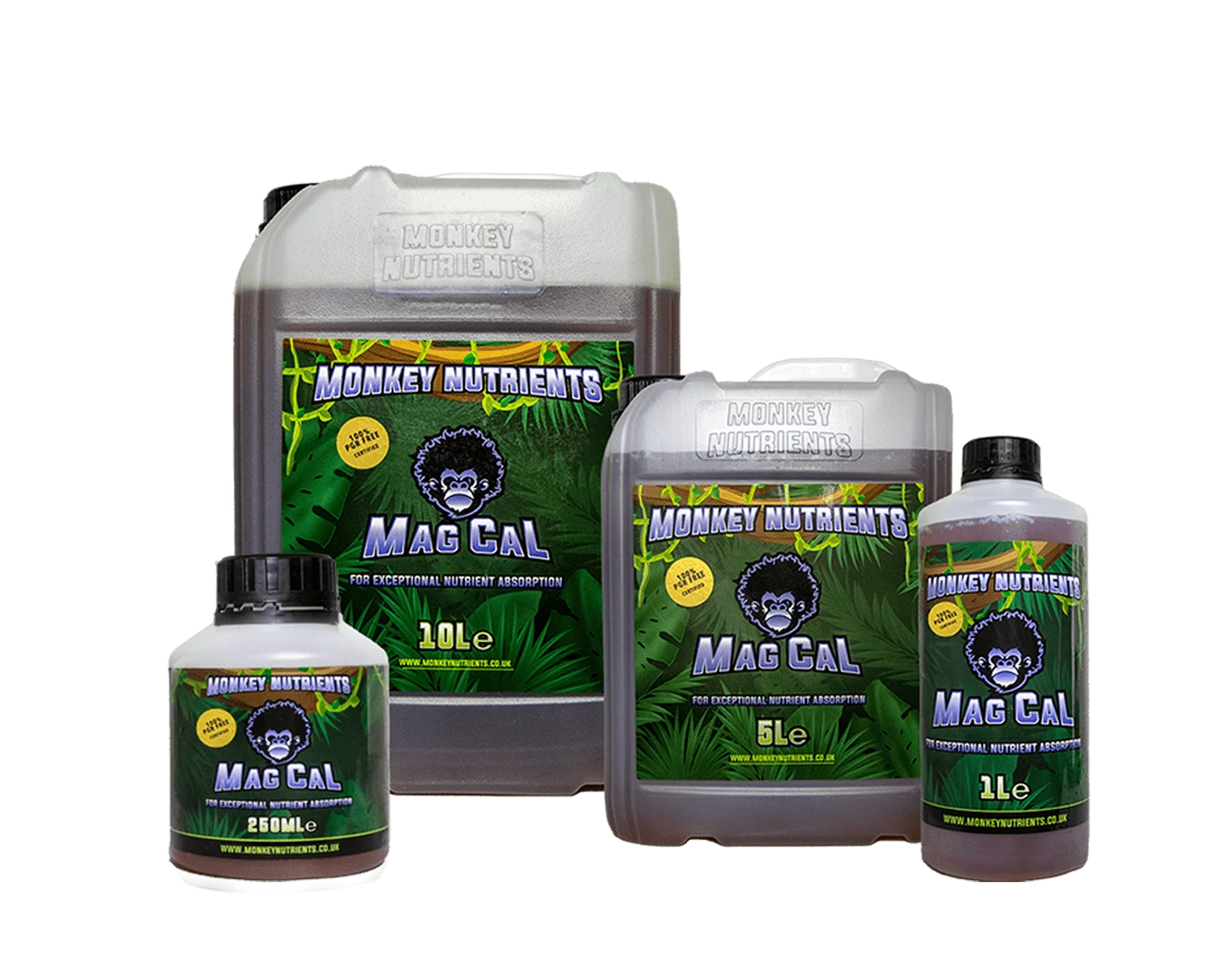
Calcium deficiency in plants often affects young growth, whereas magnesium deficiency tends to start on older leaves. Magnesium for plants is important because it sits at the centre of chlorophyll; calcium supports cell wall strength. Coco can bind calcium and magnesium. Monkey Mag Cal supplies magnesium and calcium with trace elements and is particularly relevant to coco, soft water and RO water. The water and cal mag guides explain these existing product uses; a leaf pattern alone does not establish that a supplement is needed.
What to check first: a step-by-step checklist
Work through the checks before changing the feed. Record what you find and change one factor at a time, then watch new growth: damaged leaves may not regain their original appearance.
- Check pH: follow your meter’s calibration instructions and measure the mixed feed and relevant root-zone solution. Compare with the EC and pH guide rather than guessing from leaf colour.
- Check EC and runoff: compare the incoming feed with reservoir or runoff trends where relevant. A high reading may indicate salt accumulation, not a need for more nutrients.
- Check the water source: confirm tap, softened or RO water and review the supplier’s calcium, magnesium and hardness information where available.
- Check root health: look for poor drainage, waterlogging, damaged roots or brown, slimy roots. Review oxygenation in hydro and DWC; use the root rot guide for general guidance.
- Review the feeding record: check the growth stage, complete base feed, mixing and recent changes against the Feed Chart and Feed Calculator before adding supplements.
Overfeeding and nutrient burn
Excess feed can cause brown leaf tips, scorched edges and salt accumulation. These signs overlap with deficiencies and other stresses: do not diagnose nutrient burn from one leaf or automatically add more feed. Check EC, pH, watering, root conditions and recent changes first.
Correct the cause and use the established feeding instructions rather than stacking supplements. In hydro, change the nutrient solution in the reservoir weekly. In coco and soil, review drainage and the feeding history before changing watering or feed strength.
Using existing Monkey feeding information
Grow A+B is the two-part base nutrient for vegetative growth; Bloom A+B is the base feed for flowering. They are designed for coco, soil and hydro. Mag Cal supplies magnesium and calcium with trace elements. Root Shoot is a plant-extract root stimulator. None of these descriptions diagnoses a nutrient deficiency or promises to fix an unidentified problem.
Use the product pages for their existing directions and the Feed Chart and Feed Calculator for the confirmed programme. Investigate nutrient lockout and root conditions before assuming that more nutrients are the answer.
Good questions
How do I identify a nutrient deficiency?
Check whether symptoms start on older or newer leaves and compare the yellowing, spots or edge damage with the chart. Then check pH, EC, water source, root health and feeding history. Symptoms overlap, so the chart is general guidance rather than a diagnosis.
How do calcium and magnesium deficiencies differ?
Calcium deficiency often affects new leaves and growing tips, with distortion or brown spots. Magnesium deficiency usually begins on older leaves, with yellowing between veins that remain greener. Conditions and plant species can change the pattern.
Can nutrient lockout look like a deficiency?
Yes. Unsuitable root-zone pH, excess salts or poor root conditions can restrict nutrient uptake even when nutrients are present. Check these conditions before increasing the feed.
Do I need cal mag with UK hard or soft water?
Water hardness alone does not establish a need for a supplement. Check the supplier’s water information and your medium. Monkey Mag Cal supplies magnesium and calcium with trace elements and is particularly relevant to coco, soft water and RO water.
Does a high EC tell me which nutrient is missing?
No. EC measures overall dissolved salts, not individual nutrients. Compare feed and root-zone trends with your records, and investigate salt accumulation and nutrient imbalance rather than treating a high reading as a deficiency test.
Should I add more nutrients when leaves have burnt tips?
Not automatically. Burnt tips and edges can be associated with overfeeding, but other stresses can look similar. Check EC, pH, watering and roots first, and assess new growth after correcting the underlying conditions.